
Chapters
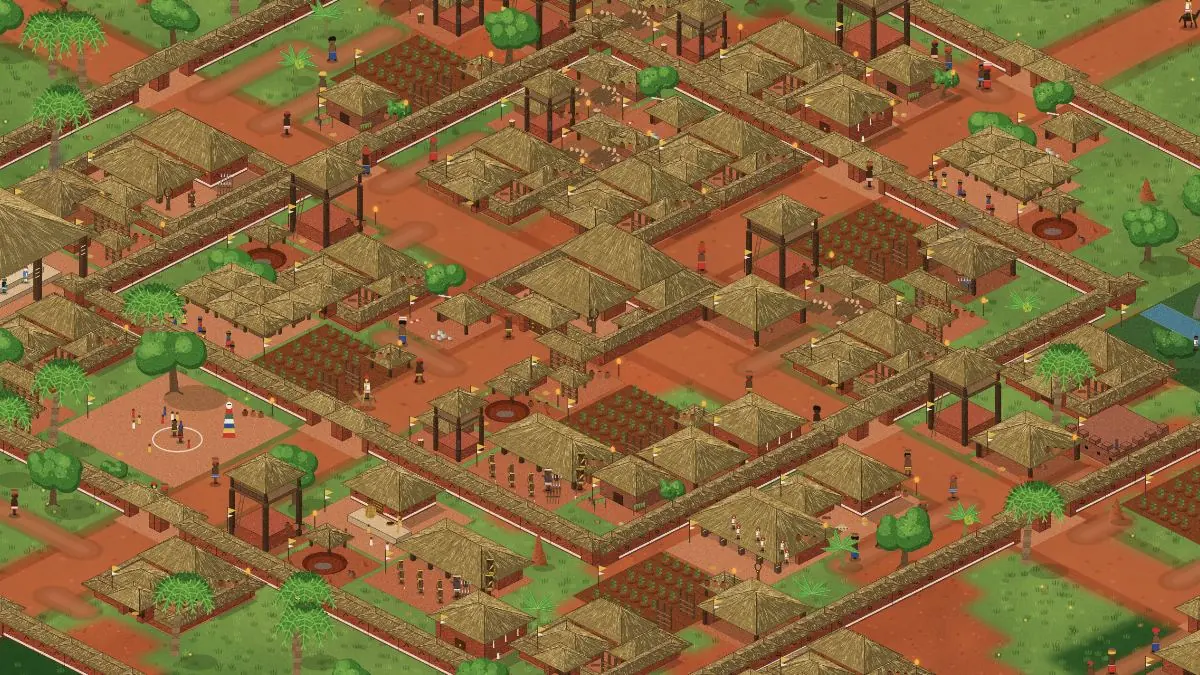
Nri and the Igbo towns
Igbo · Forest, yam farms and the Anambra valley
Play NriEra I · Before the Flag
The five ages
- 1
The first Eze Nri
c. 1225–1400 · town-centre level 1Nri traditions say Eri was sent down to the Anambra valley, and his son became the first Eze Nri; one historian dates the first Eze Nri to about 1225. At Igbo-Ukwu, a short walk away, people were already casting bronzes in the 9th century. Clear the forest and plant yams.
- 2
The Nri peace
1400–1640 · town-centre level 4Nri priests with ichi scars on their faces travel from town to town to cleanse the land of abominations, crown titled men and settle quarrels. Nri has no army: here violence pollutes the earth. Ozo and nze titles spread, and the four market days, Eke, Orie, Afo and Nkwo, make the Igbo week.
- 3
The Aro and the oracle
1640–1800 · town-centre level 7In the 17th century the Aro build a trading confederacy round the oracle of Ibini Ukpabi at Arochukwu, and their agents travel the whole Igbo country. The Atlantic slave trade pulls captives towards the coast. Benin and Igala press on Nri’s lands, and after 1700 its influence starts to wane.
- 4
Palm oil
1800–1885 · town-centre level 10Britain bans its own slave trade in 1807, and palm oil becomes the great export: the towns press oil and carry it down to the rivers. A Christian mission opens at Onitsha in 1857.
- 5
The Scramble
1886–1911 · town-centre level 13The Royal Niger Company holds the river from 1886. In November 1901 a British column marches against the Aro and their oracle; in 1911 another reaches Nri itself. Here your defences decide.
People of Nri
The figures who appear as the city grows, ruled by the Eze Nri.

Eri
The founder, in Nri traditionNri traditions say Eri was sent down to the Anambra valley; his son became the first Eze Nri.
Portrait: fictional depiction
Ìfikuánim
The first Eze Nri, c. 1225One historian dates the first Eze Nri to about 1225; others place Nri’s beginnings centuries earlier.
Portrait: fictional depiction
The Nri priests
Keepers of the peaceMen of Nri with ichi scars, who travelled to cleanse the land, crown titled men and settle quarrels.
Portrait: fictional depiction
The bronze casters of Igbo-Ukwu
9th centuryThey cast leaded bronze vessels and ornaments of astonishing detail by the lost-wax method.
Portrait: fictional depiction
Isaiah Anozie
Igbo-Ukwu, 1938Digging by his house, he found the first of the bronzes.
Portrait: fictional depiction
Thurstan Shaw
Archaeologist, from 1959He excavated Igbo-Ukwu and showed the world how old its bronzes were.
Portrait: fictional depiction
The Awka smiths
IronworkersSmiths from Awka travelled the Igbo country making hoes, blades and bells.
Portrait: fictional depiction
Jaja of Opobo
Born c. 1821Born in the Igbo country and sold as a boy to Bonny, he rose to found the kingdom of Opobo.
Portrait: fictional depiction
Òbalíke
Eze Nri, 1889–c. 1911The Eze Nri when the British columns came.
Portrait: fictional depiction
The Aro traders
The 17th centuryTheir confederacy grew round the oracle at Arochukwu and reached across the Igbo country.
Portrait: fictional depictionYour hero in battle

The Dike
Champion of the age gradesDike means a brave man: the champion who leads the age grades when the town must fight. Ability: War cry. The age grades rally round him: +35% damage for 12 seconds.
Portrait: fictional depictionThe council
| Seat | Who they are | Speaks for |
|---|---|---|
| The Ndichie | The titled elders | people, trade and the treasury |
| The Ochiagha | Leader in war | the age grades and Peace |
| The Nri priests | Men with ichi scars who cleanse the land | Faith |
| The dibia afa | Diviners and keepers of knowledge | Progress and research |
| The market women | They run the four-day markets | Wealth and Unity |
| The dibia | Herbalists | Health |
| The Umuada | The town’s daughters, who settle feuds between families | peace between families |
| The Ozo and Nze | The titled men | whether the Eze Nri keeps his seat |
Sign or stand
1901. A British column with machine guns marches into the Igbo country against the Aro and their oracle. On the way it summons every town to accept a Native Court and a warrant chief chosen by the British.
| Sign | Accept the court and a warrant chief, as most towns did. The column marches on, but the titled men lose their say, and Unity falls hard for a month. |
| Stand | Refuse, and call out the age grades. Many towns fought; here your defences decide. |
What really happened (the game tells you at the end)
The Aro Expedition took Arochukwu on 28 December 1901, and by early 1902 the Aro Confederacy had collapsed. Columns marched through the Igbo country for years afterwards, and in 1911 one reached Nri and forced the Eze Nri to renounce the ritual power of the ikenga. Your city rebuilds: the column will come again while you stay in the Scramble.
Raiders and bosses
Who comes for the city in each age. Bosses come once you are into their age. How raids work.
| Age | Raiders | Boss |
|---|---|---|
| First The first Eze Nri | Raiders from the forest | None |
| Second The Nri peace | Igala war bands | The Igala war From across the Niger |
| Third The Aro and the oracle | Slave raiders | The Abam raid Warriors hired by the slave traders |
| Fourth Palm oil | Fighters from a rival town | None |
| Fifth The Scramble | Patrols of the Royal Niger Company | The Aro Expedition 1901 then sign or stand |
Soldiers
| Soldier | From level | |
|---|---|---|
| Age-grade spearman | The young men of the age grade, with spear and shield. | 2 |
| Bowman | Archers who shoot from behind the spears. | 3 |
| Machete fighter | Heavy blades and hide shields for close fighting. | 7 |
| Dane-gun man | A long trade gun from the coast. One heavy shot, a long reload. | 10 |
Buildings
Every building Nri can raise, shown as it looks in the middle of the story. What each type does.
People

Family compound
Unlocks at town-centre level 1Houses of red earth under steep thatch round a swept yard, inside a wall capped with thatch against the rain. Houses your people.

Herbalist’s house
Unlocks at town-centre level 4The dibia’s leaves, roots and bark for fever and wounds. Raises Health. Raiders never touch it.

Ozo hall
Unlocks at town-centre level 5The titled men sit together to judge quarrels. Raises Trust and some Peace.
Economy

Yam farm
Unlocks at town-centre level 1Yam mounds in rows, with cocoyam and vegetables between them. Yam is the king of crops. Tap the farm when it fills to bring the harvest in.

Woodcutters’ camp
Unlocks at town-centre level 1Timber and raffia poles from the forest. Materials.

Clay pit
Unlocks at town-centre level 2Red earth for walls, floors and pots. Materials.

Yam barn
Unlocks at town-centre level 1Yams tied in rows to a frame of living poles, a farmer’s pride on show. Raises your Food storage; raiders can take only part of it.

Storehouse
Unlocks at town-centre level 1Timber, raffia and tools under a long thatch. Raises your Materials storage.

Cowrie store
Unlocks at town-centre level 3Cowries and brass manillas, the money of the markets. Raises your Wealth storage.

Nkwo market
Unlocks at town-centre level 3The market that meets every fourth day: yams, cloth, iron, salt and palm oil. Wealth, plus a little Unity.

River landing
Unlocks at town-centre level 10Canoes load yams, oil and cloth on the Anambra River. A large Wealth producer. Must touch the water.
Culture

Shrine of Ala
Unlocks at town-centre level 1A shrine to Ala, the earth goddess, keeper of morality. Raises Faith. Raiders never touch it.
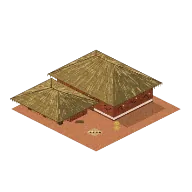
Diviners’ house
Unlocks at town-centre level 4The dibia afa read the seeds of divination and keep the town’s knowledge. Makes Knowledge and runs research. Raiders never touch it.

Village square
Unlocks at town-centre level 4The ilo, where the town gathers for wrestling, masquerades and meetings. Raises Unity.

House of the Dike
Unlocks at town-centre level 7Home of the town’s champion. Brings him to your army.

Mbari house
Unlocks at town-centre level 8A house built for Ala and filled with painted clay figures of people, spirits and animals; when it is finished it is left to return to the earth. Heritage for the ladder.
Defence

Watch post
Unlocks at town-centre level 3The age grades guard the paths at night. Raises Peace.

Lookout
Unlocks at town-centre level 2Bowmen watch the farm paths from a raised platform.

Town wall
Unlocks at town-centre level 4Red earth walls capped with thatch, raised section by section.
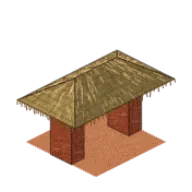
Carved gateway
Unlocks at town-centre level 4A roofed gateway with carved doors where an avenue passes the wall.

Dane-gun post
Unlocks at town-centre level 10Long trade guns from the coast. Hits hard, reloads slowly.

War council
Unlocks at town-centre level 13The titled men and the age grades plan the town’s defence. Needed to stand in 1901.
Army

Age-grade house
Unlocks at town-centre level 2The men of each age grade train and fight together. Each level holds more fighters.

Awka smiths’ forge
Unlocks at town-centre level 5Smiths from Awka travel the Igbo country making hoes, blades and bells. Raises Progress.
Landmarks

The bronze shrine at Igbo-Ukwu
Unlocks at town-centre level 4Where bronzes cast in the 9th century were found: vessels, ornaments and regalia of astonishing detail. Unity and Heritage.

Ibini Ukpabi
Unlocks at town-centre level 6The oracle of the Aro at Arochukwu, in a forest gorge with a stream. Its judgements were feared across the Igbo country. Faith and visitors.
Research
| Technology | Branch | Effect |
|---|---|---|
| Yam mounds | Farming | Deep mounds in rows: +10% Food. |
| The yam barn | Farming | Yams keep for months tied to living poles: +15% Food storage. |
| Cocoyam and pepper | Farming | More crops between the mounds: +15% Food. |
| Oil palm groves | Farming | Palm oil and palm wine from the groves: +20% Food. |
| Red earth | Building | Walls of puddled laterite rise fast: builds 8% faster. |
| Thatch caps | Building | Walls capped with thatch shed the rain: buildings +10% sturdier. |
| Age-grade labour | Building | Each age grade builds its own stretch: builds cost 8% less. |
| Carvers’ workshops | Building | Doors and posts carved in advance: builds 10% faster. |
| Awka iron | Defence | Blades from the Awka smiths: +8% damage. |
| Lookout drill | Defence | Faster, steadier volleys: towers +12% damage. |
| Hide shields | Defence | Shields for the age grades: +12% unit health. |
| Dane guns | Defence | Trade guns from the coast: +12% damage. |
| Cowries and manillas | Trade | Money every market accepts: +10% Wealth. |
| The four market days | Trade | Eke, Orie, Afo and Nkwo keep trade moving: +12% Wealth. |
| The palm oil trade | Trade | Oil carried down to the rivers: +20% Wealth. |
| Afa divination | Learning | The diviners teach their seeds and verses: +15% Knowledge. |
| The dibia’s apprentices | Learning | Herbalists and diviners train the young: research 15% faster. |
| Mission schools | Learning | Reading and writing from the river missions: +20% Knowledge. |
| Festival calendar | Heritage | The New Yam festival and the market feasts: Faith and Unity rise. |
| Masquerades | Heritage | Mmanwu, the spirits of the ancestors, dance in the square: Heritage. |
| Uli painting | Heritage | Bold designs painted on walls and skin: Heritage. |
| The Nri peace signature | Heritage | Signature tech. Nri priests settle quarrels without war: Trust and Progress in every ward. |
| Age grades on the wall signature | Defence | Signature tech. Every age grade guards its own stretch: walls 25% stronger. |
Did you know?
- Bronzes found at Igbo-Ukwu, about 18 km from Nri, date to the 9th century.
- Isaiah Anozie found the first Igbo-Ukwu bronzes in 1938 while digging by his house.
- Thurstan Shaw began excavating at Igbo-Ukwu in 1959.
- The Igbo-Ukwu bronzes were cast by the lost-wax method, among the earliest such castings in Africa.
- The Eze Nri held ritual authority but had no army; in Nri, violence was an abomination that polluted the earth.
- Nri priests carried ichi marks, facial scars, and travelled to cleanse the land of abominations.
- The Igbo week has four market days: Eke, Orie, Afo and Nkwo.
- Ozo and nze titles gave men a voice in their towns.
- After the tenth Eze Nri, any slave who set foot on Nri soil was held to be free.
- The Aro Confederacy grew in the 17th century round the oracle of Ibini Ukpabi at Arochukwu.
- The oracle’s judgements fed the slave trade: those it found guilty were sold.
- The British Aro Expedition began in November 1901 and took Arochukwu on 28 December 1901.
- In 1911 a British expedition forced the Eze Nri to renounce the ritual power of the ikenga.
- Mbari houses were built for Ala, the earth goddess, filled with painted clay figures and left to return to the earth.
- Uli designs are painted on walls and skin with dye from the uli plant.