
Chapters
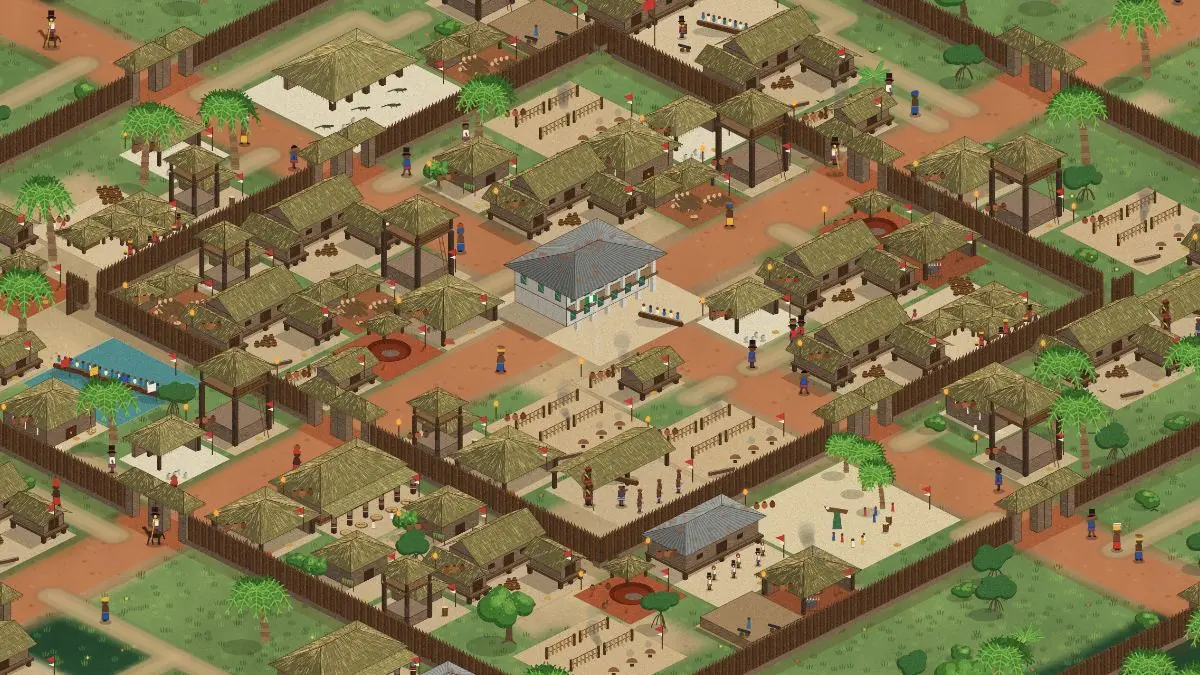
The Delta houses
Bonny, then Opobo · Mangrove creeks and the sea
Play BonnyEra I · Before the Flag
The five ages
- 1
Perekule
c. 1760–1792 · town-centre level 1Bonny, an island town at the mouth of the Bonny River, has traded with European ships since the Portuguese came in the 1400s. Around 1760 Perekule becomes king and founds the Pepple line. Trading houses, each with its own war canoes, run the town’s business, and Bonny is one of the great slave ports of the coast.
- 2
Opubo the Great
1792–1830 · town-centre level 4Under Opubo the houses grow rich. War canoes carry cannon in their bows and up to 140 people. Britain bans its own slave trade in 1807, and palm oil, ivory and pepper begin to take its place.
- 3
Palm oil
1830–1866 · town-centre level 7Oil from the inland markets comes down the creeks in canoes, and British traders keep old ships moored in the river as floating stores. The houses grow rich and jealous. The British deport King William Dappa Pepple in 1854 and bring him back in 1861.
- 4
Opobo
1869–1884 · town-centre level 10In 1869 war breaks out between the Anna Pepple and Manilla Pepple houses. Jaja, sold to Bonny as a boy, has risen to head the Anna Pepple house; he leads his people 26 miles east and founds Opobo across the oil routes. Crowned on 25 December 1870, he sells palm oil straight to the British, about 8,000 tons a year.
- 5
The Scramble
1884–1891 · town-centre level 13In 1884 the coast becomes a British protectorate, but Opobo keeps taxing British traders and closing its markets to them. In 1887 the vice-consul invites the King aboard his gunboat to talk. Here your defences decide.
People of Bonny
The figures who appear as the city grows, ruled by the Amanyanabo.

Perekule
Amanyanabo, c. 1760–1792He founded the Pepple line, which still holds the throne of Bonny.
Portrait: fictional depiction
Opubo the Great
Amanyanabo from 1792Bonny’s houses grew rich in his long reign.
Portrait: fictional depiction
William Dappa Pepple
Amanyanabo, died 1866Deported by the British in 1854 and brought back in 1861.
Portrait: fictional depiction
The war canoe crews
The houses’ fightersWar canoes carried cannon in the bow and up to 140 people.
Portrait: fictional depiction
The oil brokers
The inland tradeThey bought palm oil at the inland markets and paddled it down to the ships.
Portrait: fictional depiction
Oko Jumbo
Head of the Manilla Pepple houseJaja’s great rival in Bonny.
Portrait: fictional depiction
Jaja of Opobo
Amanyanabo of Opobo, 1870–1887Born about 1821 in the Igbo country and sold to Bonny as a boy, he rose to head the Anna Pepple house and founded Opobo in 1869.
Portrait: fictional depiction
The Opobo traders
The 1870sThey held the oil markets behind Opobo and sold straight to the British.
Portrait: fictional depictionYour hero in battle

The war canoe chief
Chief of the war canoesEvery house kept war canoes with cannon in the bow; their chief leads the crews on the water and on land. Ability: Canoe assault. The crews land together from the creek: +35% damage for 12 seconds.
Portrait: fictional depictionThe council
| Seat | Who they are | Speaks for |
|---|---|---|
| The house chiefs | Heads of the trading houses | people, trade and the treasury |
| The war canoe chief | Commander of the house canoes | the army and Peace |
| The priest of Ikuba | Keeper of the town’s guardian shrine | Faith |
| The house scribes | They keep the accounts and letters in English | Progress and research |
| The oil brokers | They buy oil at the inland markets | Wealth and Unity |
| The healer | Remedies | Health |
| The Court of Equity | Chiefs and captains who settle trade disputes, from the 1850s | trade disputes and order |
| The house chiefs in council | They choose and can unmake the Amanyanabo | whether you keep the throne |
Sign or stand
1887. The British vice-consul demands that Opobo open its markets to every trader and stop taxing the British. He invites the King aboard his gunboat to talk, promising he will be free to leave.
| Sign | Open the markets and accept the consul’s terms. The King keeps his throne, but the houses lose their hold on the oil trade, and Unity falls hard for a month. |
| Stand | Refuse to go aboard, close the creeks and man the war canoes. History went the other way; here your defences decide. |
What really happened (the game tells you at the end)
In September 1887 Jaja went aboard to talk and was seized. He was tried at Accra and exiled to the West Indies. Allowed home at last in 1891, he died on the way, at Tenerife, and was buried at Opobo. Your city rebuilds: the gunboat will come again while you stay in the Scramble.
Raiders and bosses
Who comes for the city in each age. Bosses come once you are into their age. How raids work.
| Age | Raiders | Boss |
|---|---|---|
| First Perekule | Raiders from the creeks | None |
| Second Opubo the Great | War canoes of New Calabar | The war with New Calabar Kalabari against Bonny |
| Third Palm oil | Canoes of a rival house | None |
| Fourth Opobo | War canoes from Bonny | The war with Bonny After the split of 1869 |
| Fifth The Scramble | Patrols from the consulate | The consul’s gunboat 1887 then sign or stand |
Soldiers
| Soldier | From level | |
|---|---|---|
| Canoe spearman | Canoe crews who fight on land with spear and shield. | 2 |
| Bowman | Archers who shoot from behind the spears. | 3 |
| Canoe swordsman | A house’s best fighters, with cutlasses and shields. | 7 |
| Musketeer | Guns from the ships were common on the rivers. One heavy shot, a long reload. | 10 |
Buildings
Every building Bonny can raise, shown as it looks in the middle of the story. What each type does.
People

House compound
Unlocks at town-centre level 1A trading house lives round its chief’s yard: walls of mud and wattle on raised floors above the floods, under palm-leaf thatch. Houses your people.

Healer’s house
Unlocks at town-centre level 4Leaves, roots and bark for fever and wounds. Raises Health. Raiders never touch it.

House council
Unlocks at town-centre level 5The heads of the houses meet to settle the town’s business. Raises Trust and some Peace.
Economy

Fishing camp
Unlocks at town-centre level 1Fish, crabs and periwinkles from the creeks, smoked over slow fires. Tap the camp when it fills to bring the catch in.

Mangrove cutters
Unlocks at town-centre level 1Poles and firewood from the mangrove swamps. Materials.

Clay pit
Unlocks at town-centre level 2Clay dug from the islands for walls and floors. Materials.

Fish store
Unlocks at town-centre level 1Smoked fish, yams brought down from the mainland and salt. Raises your Food storage; raiders can take only part of it.

Storehouse
Unlocks at town-centre level 1Poles, casks and canoe timber under a long thatch. Raises your Materials storage.

Manilla store
Unlocks at town-centre level 3Brass manillas and copper rods, the money of the oil rivers. Raises your Wealth storage.

Oil market
Unlocks at town-centre level 3Palm oil comes down the creeks from the inland markets in canoes and goes out in casks. Wealth, plus a little Unity.

The hulks
Unlocks at town-centre level 10Old ships moored in the river as floating stores, where the oil casks wait for the voyage home. A large Wealth producer. Must touch the water.
Culture

Ancestor shrine
Unlocks at town-centre level 1Each house honours its founders at its own shrine. Raises Faith. Raiders never touch it.
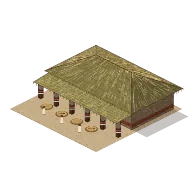
Traders’ school
Unlocks at town-centre level 4The house heads learned to read and write English for the trade, and kept their letters and accounts in it. Makes Knowledge and runs research. Raiders never touch it.

Dance ground
Unlocks at town-centre level 4Sand for drums, dances and masquerades. Raises Unity.

War canoe chief’s house
Unlocks at town-centre level 7Home of the chief of the war canoes. Brings him to your army.

The Amanyanabo’s palace
Unlocks at town-centre level 8A great house with verandas and an iron roof from the ships, where the king received the captains. Heritage for the ladder.
Defence

Creek watch
Unlocks at town-centre level 3Canoes guard the channels at night. Raises Peace.

Lookout
Unlocks at town-centre level 2Bowmen watch the channels from a raised platform.

Stockade
Unlocks at town-centre level 4A stockade of mangrove stakes, built section by section.
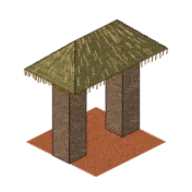
Water gate
Unlocks at town-centre level 4A guarded gate where an avenue passes the stockade.

Cannon platform
Unlocks at town-centre level 10Cannon bought from the ships, dug in on the beach. Hits hard, reloads slowly.

War council
Unlocks at town-centre level 13The house chiefs plan the town’s defence. Needed to stand in 1887.
Army

War canoe house
Unlocks at town-centre level 2Each trading house kept its own war canoes and crews. Each level holds more fighters.
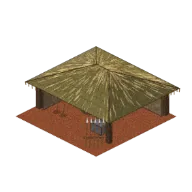
Blacksmith’s shed
Unlocks at town-centre level 5Iron from the ships hammered into blades and hooks. Raises Progress.
Landmarks

The regatta
Unlocks at town-centre level 4War canoes dressed in flags and cloth race on the creek to the beat of drums. Unity and visitors.

Ikuba temple
Unlocks at town-centre level 6The temple of Ikuba, the town’s guardian; the monitor lizards that walked its streets were sacred to it until 1867. Faith and Heritage.
Research
| Technology | Branch | Effect |
|---|---|---|
| Fish traps | Farming | Woven traps in the creeks: +10% Food. |
| Smoking racks | Farming | Smoked fish keeps for months: +15% Food storage. |
| Periwinkles and oysters | Farming | Shellfish from the mangrove roots: +15% Food. |
| Farms on the mainland | Farming | Yams and plantains from the mainland farms: +20% Food. |
| Mangrove poles | Building | Strong poles from the swamps: builds 8% faster. |
| Iron roofs | Building | Corrugated iron from the ships keeps out the rain: buildings +10% sturdier. |
| House labour | Building | Every member of the house builds: builds cost 8% less. |
| Ready-made houses | Building | Chiefs order house frames from overseas: builds 10% faster. |
| Cutlasses from the ships | Defence | Better blades for the crews: +8% damage. |
| Lookout drill | Defence | Faster, steadier volleys: towers +12% damage. |
| Canoe shields | Defence | Hide shields for the crews: +12% unit health. |
| Cannon in the bows | Defence | War canoes with guns: +12% damage. |
| Brass manillas | Trade | Money every market on the rivers accepts: +10% Wealth. |
| Trust | Trade | Captains advance goods on credit, repaid in oil: +12% Wealth. |
| The palm oil trade | Trade | Oil for the factories of Britain: +20% Wealth. |
| Writing in English | Learning | Traders keep accounts and letters: +15% Knowledge. |
| House schools | Learning | The sons of the houses learn to read and write: research 15% faster. |
| The mission press | Learning | Books and lessons in Ibani and English: +20% Knowledge. |
| Festival calendar | Heritage | A year of festivals: Faith and Unity rise. |
| Water-spirit masquerades | Heritage | Masked dancers of the creek spirits: Heritage. |
| The regatta | Heritage | Canoe races in flags and cloth: Heritage. |
| The house system signature | Heritage | Signature tech. Any member of a house, even one bought as a slave, can rise to head it: Trust and Progress in every ward. |
| War canoes signature | Defence | Signature tech. Canoes with cannon guard the beaches: stockades 25% stronger. |
Did you know?
- Bonny’s first kings are remembered as Ndoli, Opuamakuba, Alagbariya and Asimini.
- Perekule, who reigned from about 1760 to 1792, founded the Pepple line of kings.
- Bonny rose with the Atlantic trade after Portuguese ships came, and became one of the great slave ports of the coast.
- After Britain banned its slave trade in 1807, Bonny turned to palm oil, ivory and pepper.
- Bonny’s war canoes carried cannon in their bows and could hold 140 people.
- Bonny’s trading houses were run like companies, each with its own chief, members and war canoes.
- The British deported King William Dappa Pepple in 1854 and restored him in 1861.
- In 1867 King George Pepple declared the monitor lizard no longer sacred.
- In 1869 war between the Anna Pepple and Manilla Pepple houses led Jaja to found Opobo, 26 miles east of Bonny.
- Jaja was crowned Amanyanabo of Opobo on 25 December 1870.
- By 1870 Opobo was selling about 8,000 tons of palm oil a year straight to British buyers.
- Jaja was born about 1821 in the Igbo country and sold as a boy to Bonny.
- In 1887 Jaja was seized aboard a British ship, tried at Accra and exiled to the West Indies.
- Jaja died in 1891 at Tenerife, on his way home, and was buried at Opobo.
- A memorial to King Jaja was put up in Opobo in 1903.